4-3-3 vs 3-5-2: What a Formation Really Tells You
LuckyScore Editorial · 2026-11-07T21:41:02.069146+00:00
The lineup graphic is only the starting position. See how player roles, width and movement change a formation when a team attacks or defends.
Watch the full-backs, not just the formation graphic
A nominal 4-3-3 may look very different when a full-back moves into midfield or both push forward. Watch who protects the space they leave, who provides width and how many players remain behind the ball. Those movements are more revealing than the three numbers on the lineup screen.
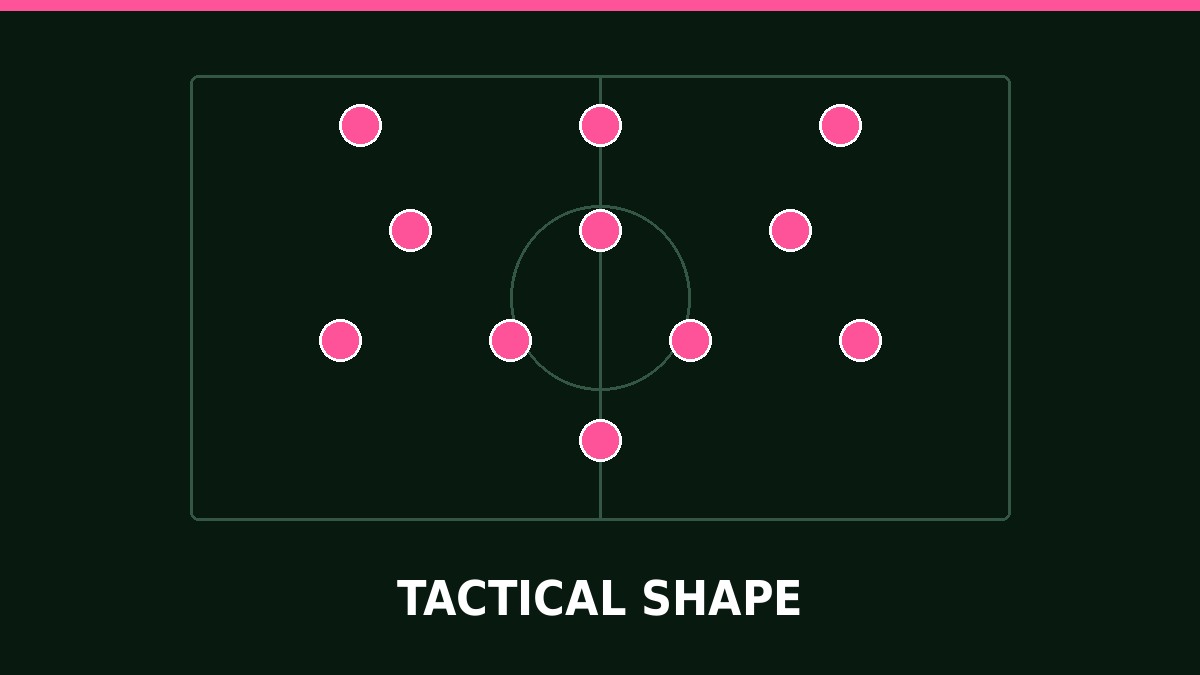
Football formations describe how a team's outfield players are arranged. A 4-3-3 usually means four defenders, three midfielders and three forwards. The goalkeeper is excluded from the numbers, so the listed lines add up to ten.
A formation is a starting reference rather than a fixed map. Players move when possession changes, and the same team can attack in one shape before defending in another.
The main football positions
The goalkeeper protects the goal and helps start attacks. Centre-backs defend central areas, challenge for aerial balls and support possession. Full-backs operate on either side of a back four, balancing defensive work with forward support.
A defensive midfielder screens the defence and offers passing options. Central midfielders connect phases of play, while an attacking midfielder often receives between the opposition's midfield and defensive lines.
Wingers provide width or move inside to threaten goal. A striker usually leads the attack, although some drop deeper to link play. Wing-backs combine wide attacking and defensive duties, commonly alongside three centre-backs.
4-3-3: width and midfield connections
A 4-3-3 typically features a central striker with two wide forwards. Its midfield might contain one deeper player and two more advanced midfielders, although the exact balance varies.
The wide forwards can stretch the opposition, creating space for midfield runs. Full-backs may overlap outside them or move into central areas. If too many players advance simultaneously, however, turnovers can expose space behind the attack.
A useful real coaching example comes from the FIFA Training Centre's UAE U15 session. The team practised building attacks in a 4-3-3 while also preparing to press in a 4-4-2, illustrating how one team can use different shapes.
4-4-2: two forwards and connected lines
The familiar flat 4-4-2 places four midfielders behind two strikers. It can provide clear defensive responsibilities and two forward targets when possession is regained.
Its central midfield pair can be outnumbered by three opponents unless teammates help. The wide midfielders therefore have important responsibilities when the team narrows to protect the centre.
The FIFA Training Centre's NEC Nijmegen U19 session demonstrates compact 4-4-2 defending, including one striker pressing while the other screens central passing lanes.
3-5-2: central numbers and wing-back width
A 3-5-2 usually combines three centre-backs, two wing-backs, three central midfielders and two forwards. The central players can offer several passing options while the strikers occupy opposing defenders.
Wing-backs must cover substantial ground. When they retreat alongside the centre-backs, the shape often resembles a 5-3-2. If they remain high after possession is lost, opponents may attack the spaces outside the back three.
4-2-3-1 and what to watch
A 4-2-3-1 uses two deeper midfielders behind three attacking midfielders and one striker. It can offer central protection without sacrificing players between the lines.
When watching, ask who supplies width, who protects counterattacks and who supports the striker. Use fixtures to choose a match and live scores to follow it. Our team consistency guide connects tactical observations with longer-term results.